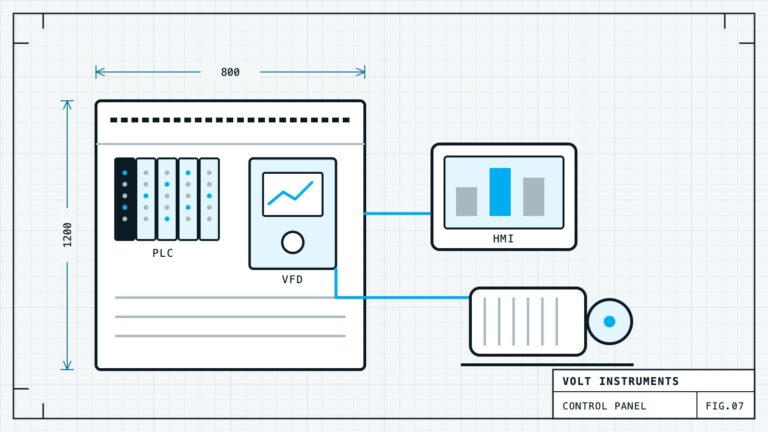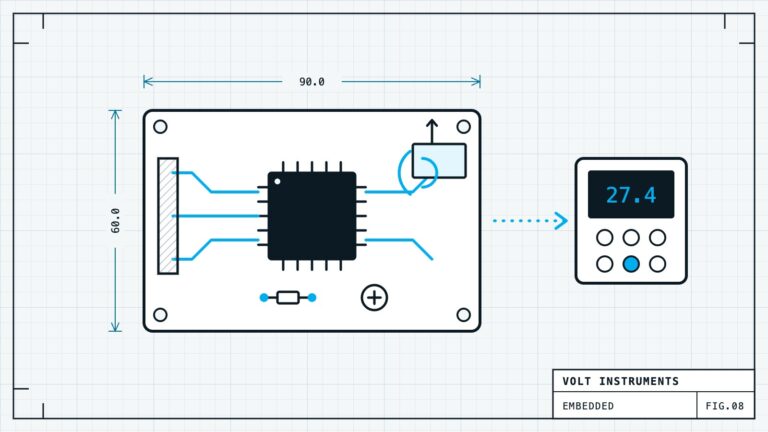
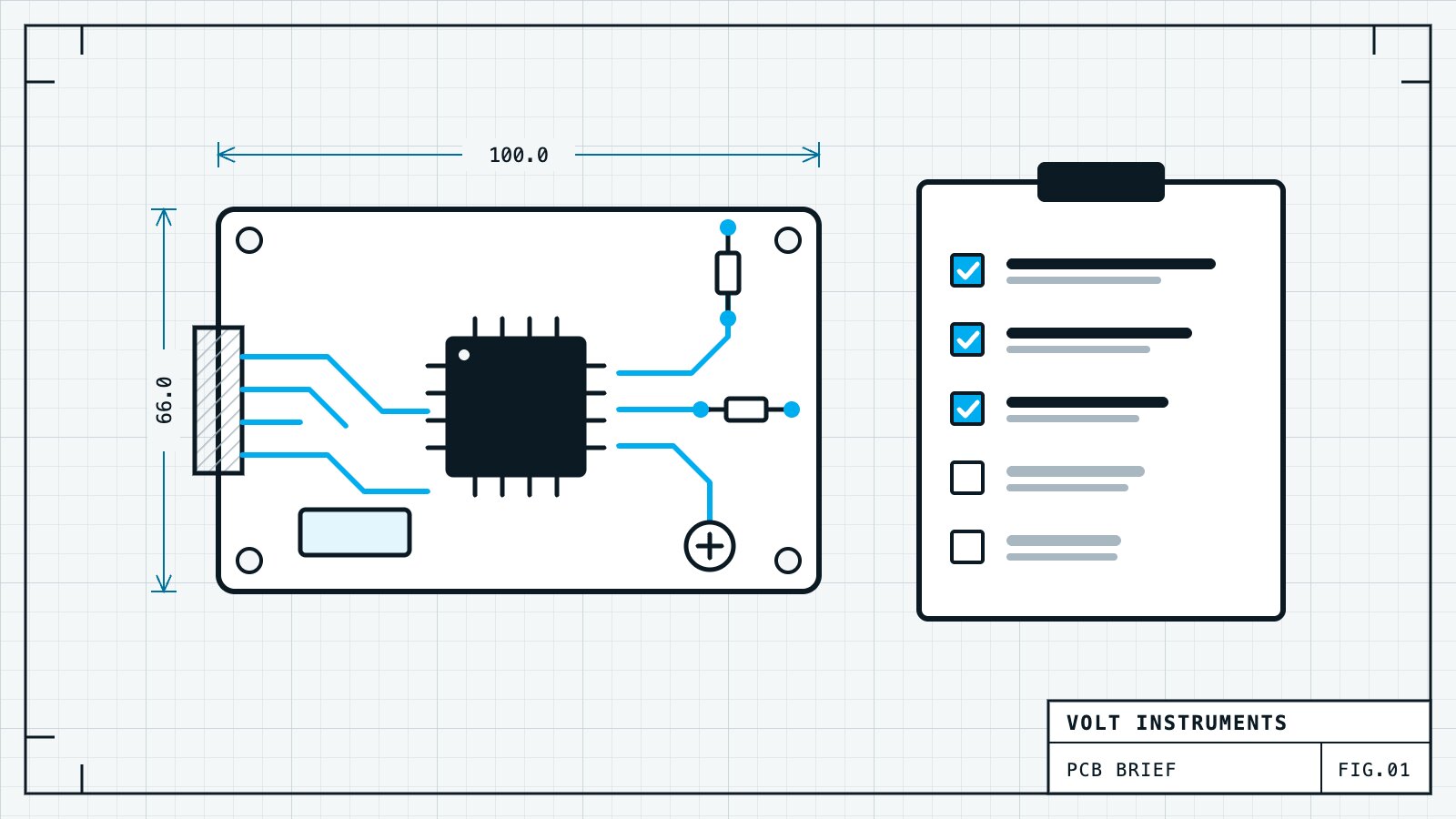
You do not need a finished specification to start a PCB project with us. A sketch, a photo of an old board or a few lines describing what the device must do is enough for a first conversation. That said, the more of the points below you can answer, the faster we can give you an accurate quote and the fewer surprises there are later.
1. What the board has to do
Describe the job in plain words: what goes in, what comes out, and what happens in between. For example, “reads two temperature sensors, switches a 230 V heater through a relay and shows the reading on a small display”. Inputs, outputs and the rules that connect them are the core of every design.
2. Where it will live
- Power: mains, a battery, solar, or a supply from another machine. Tell us the voltage if you know it.
- Environment: indoors, outdoors, a dusty workshop, a pump house, a vehicle. Heat, moisture and vibration change component and enclosure choices.
- Size limits: if it has to fit an existing box or panel cut-out, send the dimensions or a photo with a ruler beside it.
3. How many you need
One prototype, ten units for a pilot, or a production batch of hundreds all lead to different decisions. For a single unit we can favour parts that are quick to source; for larger runs we design for easier assembly and lower cost per board.
4. Anything you already have
Existing schematics, Gerber files, datasheets of parts you want to use, a competitor product you like, or a board that needs replacing are all useful. Our enquiry form accepts PDF, images and ZIP files up to 10 MB each.
5. Your timeline and what “done” means
Tell us when you need the first working unit and what you will use it for: a demo, field trials, or sale to customers. A demo board and a product that must survive years in the field are tested very differently.
What happens next
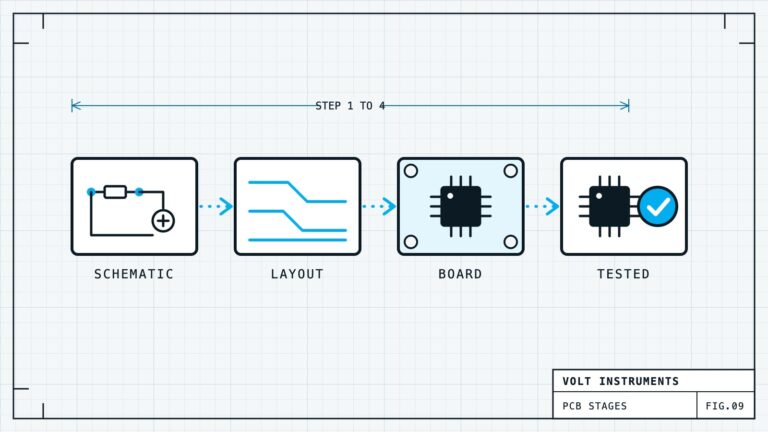
We read the brief, ask about anything that is unclear, and come back with a plan and a quote. From there the work usually runs through schematic, PCB layout, a prototype that we assemble and test in the workshop, your review, and then the production units. You can read more about this on our PCB design and printing page.
Have a board in mind? Send us your brief or call the workshop on +91 80537 03030.